Fire Alarm vs. Smoke Detector: Understanding the Installation Differences

Quick Overview
Fire alarms and smoke detectors are often used interchangeably, but they serve very different roles in fire protection. One is a complete system designed to protect an entire building, while the other is a single device focused on early smoke detection.
Understanding how they differ—especially in installation, coverage, and functionality—is essential when choosing the right solution for your home or property.
What Is a Fire Alarm System?
A fire alarm system is a fully connected network designed to detect fire hazards and alert occupants across an entire property.
Instead of working alone, it combines multiple devices that communicate with a central control unit, ensuring that every area is covered and every alert is coordinated.

Core Components
Control Panel – The central unit that receives and processes signals
Detectors and Sensors – Devices that detect smoke, heat, or fire conditions
Notification Devices – Sirens, strobes, or alarms that alert occupants
Manual Call Points – Devices that allow occupants to trigger alarms manually
What Is a Smoke Detector?
A smoke detector is a standalone device designed to detect smoke and alert people within a specific area.
It’s commonly used in homes and small spaces where full system integration may not be necessary.
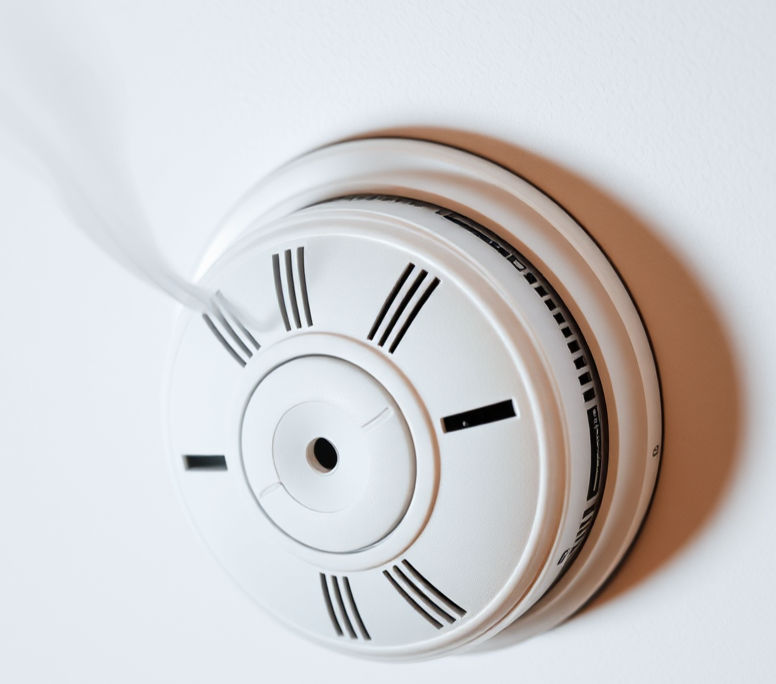
Types of Smoke Detectors
Ionization Detectors – Best for fast-flaming fires
Photoelectric Detectors – Better for slow, smoldering fires
Dual-Sensor Detectors – Combine both technologies for broader detection
Key Differences Between Fire Alarms and Smoke Detectors
Coverage
Fire Alarm System – Protects the entire building through a connected network
Smoke Detector – Covers only the immediate area where it’s installed
Communication
Fire Alarm System – Communicates across multiple devices and can trigger building-wide responses
Smoke Detector – Sounds a local alarm only
Integration
Fire Alarm System – Can connect with sprinklers, emergency lighting, and other safety systems
Smoke Detector – Operates independently
Monitoring
Fire Alarm System – Can be linked to monitoring centers for automatic emergency response
Smoke Detector – Relies on occupants to hear and respond
Installation: What Sets Them Apart
Fire Alarm System Installation
Installing a fire alarm system requires planning, expertise, and compliance with safety standards.
Key steps include:
Conducting a fire risk assessment
Designing system layout and zones
Installing wiring and control panels
Integrating with other building systems
Testing for compliance and performance
Because of its complexity, installation is typically handled by professionals.
Smoke Detector Installation
Smoke detectors are easier to install but still require proper placement.
Key considerations:
Install on ceilings or high on walls
Place in bedrooms, hallways, and key living areas
Avoid areas prone to steam or false alarms
Choose between battery-powered or hardwired options
Many units can be installed without professional help, though proper setup is still important.
Cost Differences
Fire Alarm Systems
Higher upfront cost due to system complexity
Includes multiple devices, wiring, and integration
Requires ongoing professional maintenance
Smoke Detectors
Lower cost and easier installation
Minimal maintenance (battery replacement and periodic testing)
Compliance and Safety Requirements
Both fire alarm systems and smoke detectors must meet safety standards and building codes.
Regulations determine where devices must be installed
Larger or commercial buildings often require full alarm systems
Proper installation can affect insurance coverage and compliance
Meeting these requirements ensures that your system performs reliably during emergencies.
Which One Is Right for You?
The right choice depends on your property type and level of protection needed:
Small homes or apartments → Smoke detectors may be sufficient
Large homes or commercial buildings → Fire alarm systems provide better coverage and coordination
High-risk environments → Integrated systems are essential
Fire protection isn’t just about having devices—it’s about having the right system in place.
Smoke detectors provide essential early warnings, while fire alarm systems deliver comprehensive, coordinated protection across an entire property.
At CyberShield, we focus on helping you choose and implement the right fire safety solution based on your specific needs—ensuring reliable protection, compliance, and peace of mind.


