How Alarm Systems Stay Connected During Power or Internet Outages

Quick Overview
One of the biggest concerns homeowners have during a power or internet outage is whether their alarm system will still work. The good news is that most modern security systems are designed with backup communication and power solutions that keep them running even when the lights go out.
Today’s advanced alarm systems use battery backups, cellular communication, and dual-path connectivity to maintain contact with monitoring centers during disruptions. These layered protections help ensure continuous security when normal power or internet service fails.
Modern alarm systems are built with multiple layers of protection to ensure continuous communication during power or internet outages.
With backup batteries, cellular communication, cloud integration, and professional monitoring, today’s systems are designed to remain reliable even during unexpected disruptions.
At CyberShields, the focus is on delivering smarter, more resilient security solutions that stay connected when protection matters most.

How Alarm Systems Normally Communicate
Modern alarm systems rely on different communication methods to send alerts from the control panel to monitoring centers.
Common Communication Methods
Landline Communication
Traditional systems use telephone lines to send signals. While reliable in some cases, they are becoming less common due to limited flexibility and vulnerability to physical damage.
Internet-Based Communication
Many modern systems use broadband or Wi-Fi connections for faster communication and smart home integration.
Cellular Communication
Cellular-enabled systems use LTE or 5G networks to transmit encrypted signals independently from home internet connections.
Dual-Path Communication
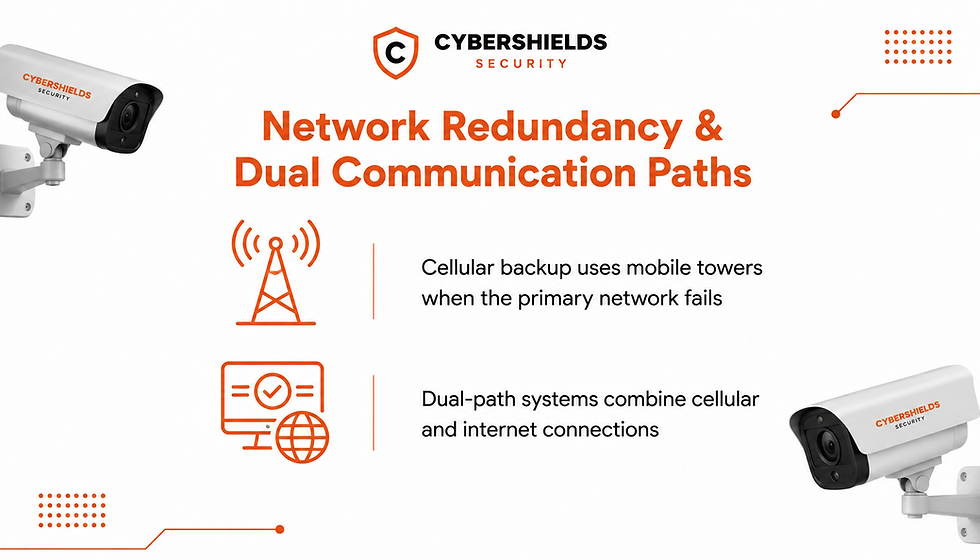
Advanced systems combine internet and cellular communication to provide greater reliability and automatic failover during outages.

What Happens During a Power Outage?
When power is lost, alarm systems automatically switch to internal backup batteries.
How Backup Batteries Help
Backup batteries:
Keep the control panel active
Maintain sensor communication
Support sirens and notifications
Allow continued monitoring during outages
Most systems can operate for several hours depending on battery condition and system size.
Some smart systems prioritize critical functions to maximize battery life during extended outages.
What Happens During an Internet Outage?
If Wi-Fi or broadband service fails, systems equipped with cellular backup continue communicating through mobile networks.
Automatic Signal Switching
Dual-path systems automatically:
Detect internet interruptions
Switch communication to cellular networks
Maintain real-time monitoring without manual action
Once internet service returns, the system reconnects automatically.
What If Both Power and Internet Fail?
Modern alarm systems are designed to handle simultaneous outages.
When both fail:
Backup batteries keep the system powered
Cellular modules maintain communication
Local sirens and alerts continue functioning
This layered approach ensures the system remains operational even during major disruptions.
Power Backup Solutions in Alarm Systems
Different systems use different backup technologies.
Common Backup Options
Rechargeable Backup Batteries
The most common backup solution found in residential systems.
UPS (Uninterruptible Power Supply)
Provides stable backup power and surge protection.
Lithium-Ion Batteries
Offer longer lifespan and faster charging.
Solar Backup Systems
Used in certain outdoor or remote inst
allations for continuous charging support.
Why Dual Communication Paths Matter
Dual communication paths provide added reliability by using multiple transmission methods.
Benefits of Dual-Path Communication
Faster failover during outages
Improved signal reliability
Reduced communication interruptions
Better protection during emergencies
Some high-security systems even include a third communication layer for added redundancy.
Smart Alarm Systems and Cloud Connectivity
Modern smart alarm systems use cloud technology to improve flexibility and reliability.
Cloud-Based Features
Cloud-connected systems can:
Store activity logs remotely
Sync data automatically after outages
Allow remote access through mobile apps
Maintain event history even after interruptions
Local Smart Hub Functionality
Many smart hubs continue operating locally during network outages.
This allows:
Sensors to remain connected
Sirens to activate normally
Basic control functions to stay available
Short-range wireless protocols like Zigbee and Z-Wave help devices continue communicating without internet access.
How Professional Monitoring Handles Outages
Professional monitoring centers use advanced infrastructure to maintain continuous operation.
Monitoring Center Reliability
Monitoring providers typically use:
Multiple backup servers
Redundant communication networks
Automatic signal rerouting
Real-time alert validation systems
These systems ensure emergency alerts are still received during regional outages or network failures.
How Homeowners Can Improve Alarm Reliability
Homeowners can take several steps to improve system performance during outages.
Best Practices
Test Backup Batteries Regularly
Check battery condition every few months and replace when needed.
Use Systems with Cellular Backup
Choose alarm systems that support dual communication paths.
Perform Routine Maintenance
Inspect sensors, cables, and signal strength regularly.
Schedule Professional Inspections
Annual system checks help identify issues before emergencies occur.


