How to Choose the Best Alarm Monitoring Service for Your Home

Quick Overview
Choosing the right alarm monitoring service is about more than apps, pricing, or brand names. The best monitoring systems provide fast emergency response, reliable communication, and real protection when break-ins, fires, medical emergencies, or environmental hazards occur.
A dependable alarm monitoring service should help ensure that emergency alerts are verified quickly and that help is dispatched when it matters most.
Why Alarm Monitoring Matters
An alarm system is only effective if someone responds when danger is detected.
Professional alarm monitoring helps:
Improve emergency response times
Reduce false alarms
Maintain protection during outages
Provide 24/7 oversight
Support faster dispatch during emergencies
The right monitoring service adds an important layer of security and peace of mind for homeowners.
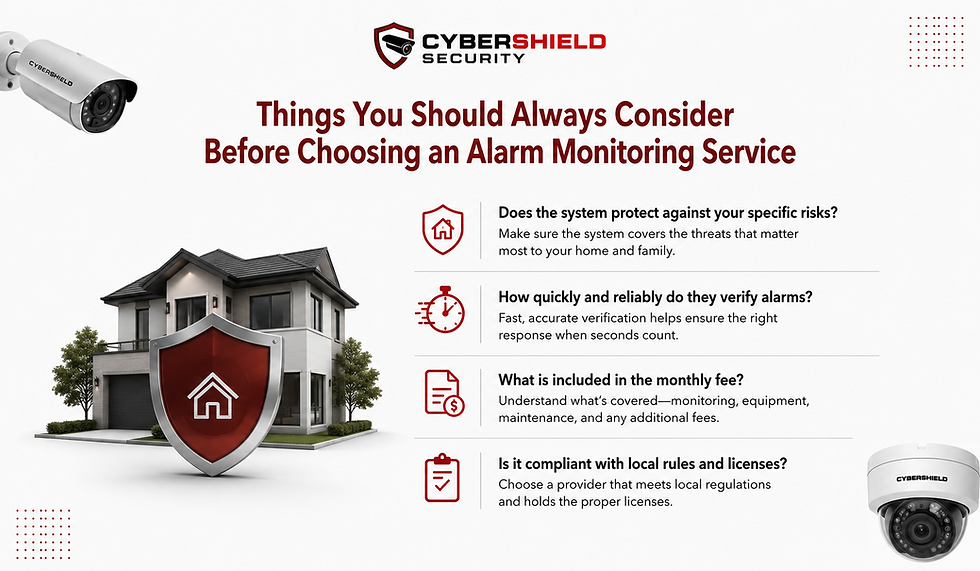
Important Factors to Consider Before Choosing a Monitoring Service
Every home has different risks, priorities, and security needs.
Before selecting a monitoring provider, homeowners should evaluate:
Emergency response reliability
Monitoring type
Smart home compatibility
Communication methods
Licensing and compliance
Contract flexibility
Monthly service inclusions
Understanding these factors helps ensure long-term protection and reliability.
1. Understand the Different Types of Alarm Monitoring

There are several types of monitoring services available, each offering different levels of protection and response support.
Central Station Monitoring
Central station monitoring is one of the most trusted forms of professional security monitoring.
With this setup:
Alarm signals are sent to a UL-certified monitoring center
Trained operators are available 24/7
Emergency responders can be dispatched quickly after verification
These systems are designed for dependable, full-time protection.
Local Monitoring
Local monitoring relies on:
On-site staff
Security personnel
Internal response procedures
While useful for certain facilities, local monitoring may not provide the same level of reliability for residential protection.
Direct Fire or Police Monitoring
Some systems connect directly to emergency response agencies.
These setups:
Allow immediate dispatch
May require special permits or approvals
Are more common in specialized or high-risk environments
Availability varies depending on local regulations.
Proprietary Monitoring
Proprietary systems are managed internally by private organizations or facilities.
These are more common in:
Large commercial buildings
Campuses
Industrial properties
Most residential homeowners do not require this level of infrastructure.
Self-Monitoring
Self-monitoring systems send alerts directly to the homeowner’s smartphone.
Benefits include:
Lower monthly costs
Direct mobile control
Flexible remote access
However, homeowners are responsible for responding to alerts themselves.
2. Understand Your Home Security Needs

Before choosing a monitoring service, evaluate the types of risks your home may face.
Intrusion and Break-In Protection
Intrusion monitoring typically includes:
Door and window sensors
Motion detectors
Glass-break sensors
Professionally monitored systems help ensure faster emergency response when unauthorized access is detected.
Fire and Smoke Detection
Monitored fire alarm systems can:
Detect smoke and heat
Notify emergency responders quickly
Improve evacuation response
This is especially important for:
Homes with children
Older electrical systems
Multi-level properties
Carbon Monoxide Monitoring
Carbon monoxide detection adds protection against:
Gas leaks
Furnace malfunctions
Dangerous indoor air conditions
Monitored CO detectors provide faster emergency notification during hazardous situations.
Flood and Water Leak Monitoring
Water sensors help detect:
Pipe leaks
Appliance failures
Basement flooding
Early detection helps reduce costly property damage.
Medical Emergency Monitoring
Medical alert systems may include:
Panic buttons
Wearable emergency pendants
Emergency dispatch support
These features are valuable for seniors or individuals with medical conditions.
3. Choose a UL-Listed Monitoring Center
A UL-listed monitoring center meets strict industry standards for:
Reliability
Emergency response
Backup systems
Operator training
These facilities are built to remain operational during:
Power outages
Severe weather
Communication disruptions
Choosing a certified monitoring center improves reliability during real emergencies.
4. Evaluate Response Times and Verification Methods

Fast response is critical, but accurate verification is equally important.
Verification methods may include:
Enhanced call verification
Video verification
Audio verification
Two-way communication
Verified emergencies often receive faster priority response from emergency services.
5. Understand Monthly Monitoring Costs

Monitoring costs vary depending on:
Equipment features
Communication methods
Smart home integration
Monitoring coverage
Before signing up, confirm:
Whether pricing is fixed or tiered
If fire and CO monitoring are included
Whether cellular backup costs extra
Contract cancellation terms
Understanding the full cost structure helps avoid unexpected fees.
6. Check Smart Home Compatibility
Many homeowners prefer systems that integrate with smart home devices.
Modern monitoring systems may support:
Smart locks
Security cameras
Smart lighting
Thermostats
Voice assistants
Remote access and automation improve convenience and overall system control.
7. Review Contracts and Customer Support
Before choosing a provider, review:
Contract length
Technical support availability
Transfer policies if moving
Cancellation flexibility
Reliable customer support is important for long-term system performance and maintenance.
8. Understand Local Licensing and Permit Requirements

Alarm monitoring providers should comply with:
State licensing regulations
Local permit requirements
False alarm policies
In some cities, homeowners may need to register their alarm systems with local authorities.
Working with experienced providers helps ensure compliance and smoother emergency response coordination.
Why Reliable Monitoring Matters
In emergencies, delayed response can increase:
Safety risks
Property damage
Emergency response times
A professionally monitored alarm system helps ensure threats are addressed quickly and accurately.
Choosing the right alarm monitoring service requires more than comparing prices or app features. Homeowners should focus on reliability, emergency response capability, monitoring quality, and long-term protection.
At CyberShield, the focus is on helping homeowners choose dependable security and monitoring solutions designed to provide stronger protection, faster response, and greater peace of mind.


