Live Video Monitoring for Warehouses and Industrial Buildings

Live video monitoring combines security cameras with remote review and a defined response process. Depending on the service, operators may watch selected camera feeds or review video after an alert, then follow agreed steps such as notifying designated contacts or requesting assistance.
For warehouses and industrial buildings, the system should be designed around the site’s layout, operating hours, lighting, network, and security priorities. Live video monitoring supports security operations; it does not replace a building’s fire alarm system or required fire alarm testing.
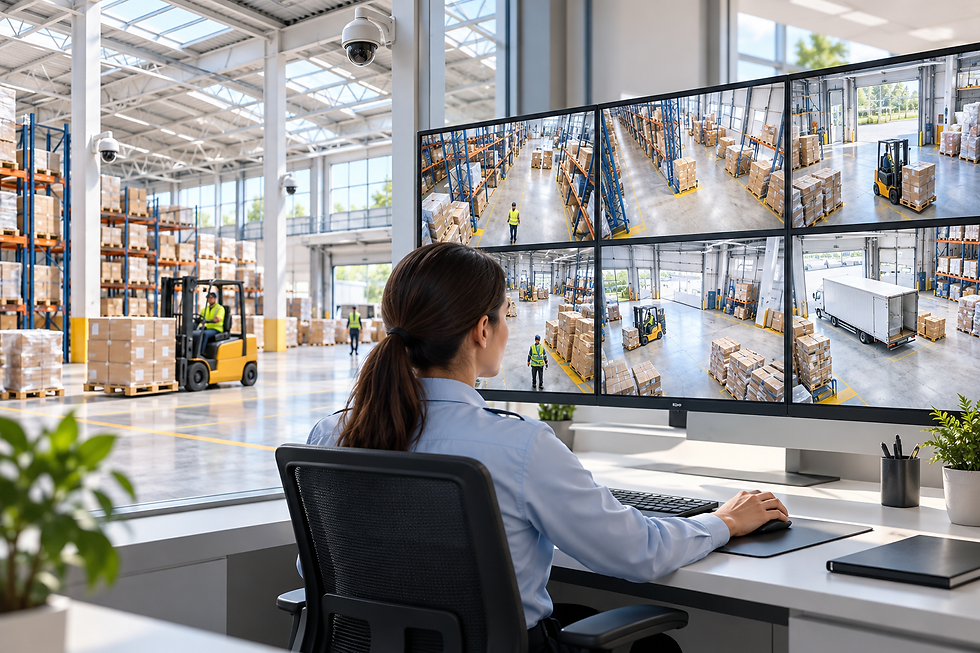
How Live Video Monitoring Works
Cameras send live or recorded video to a video-management platform. A remote monitoring service may review selected feeds continuously, monitor during specified hours, or review video triggered by motion or another event.
The operator follows the response plan established for the property. Depending on the contract, that may include contacting site management, using an audio warning, or requesting assistance. Monitoring coverage and response steps vary by provider, so confirm them in writing.
UL Solutions describes managed video monitoring as a service in which monitoring stations review cameras and related equipment at a protected property. Its certification information also emphasizes that services are defined by the agreement between the property owner and provider. UL Solutions: Managed Video Monitoring
Where Warehouses May Use Video Monitoring
Loading docks and delivery areas
Cameras can help staff review vehicle activity, deliveries, and access to loading zones. The camera view should account for lighting, vehicle movement, and obstructions such as trailers or stored materials.
Gates, entrances, and perimeter areas
Review access points, employee entrances, and perimeter routes. Camera placement should support a clear view of the intended area and coordinate with lighting, fencing, and gate controls.
Inventory and equipment areas
Interior cameras may help monitor selected high-value storage zones, tool rooms, or production areas. Define who may view recordings and how footage will be handled after an incident.
Construction and outdoor storage sites
Temporary or permanent camera systems may help observe equipment yards and material storage. Confirm power, network connectivity, mounting, weather exposure, and the monitoring schedule before deployment.
What to Plan Before Choosing a Service
Identify the security objectives
List the site’s main concerns, such as after-hours entry, unauthorized vehicle access, inventory loss, or activity in restricted areas. This helps determine which cameras need live review and which may only need to record for later investigation.
Review camera coverage and lighting
Walk the property during operating and non-operating hours. Check blind spots, glare, shadows, changing daylight, and areas blocked by shelving or vehicles. A camera may need different positioning or lighting to produce useful footage.
Confirm the monitoring response
Ask the provider:
Which cameras will be monitored?
Will operators watch continuously or review triggered events?
What hours are covered?
Who receives alerts?
When may the provider contact emergency services?
What actions can operators take on site?
How are outages or lost camera connections reported?
Check network, power, and storage
Video monitoring depends on equipment and connectivity. Confirm the site’s internet capacity, camera power, backup arrangements, recording method, and video retention period. For large or multi-building sites, confirm how the system will scale as cameras or locations are added.
Establish privacy and access controls
Limit access to authorized users and create procedures for exporting, sharing, and preserving footage. Consider privacy implications when placing cameras or enabling audio features, and consult qualified counsel about applicable requirements.
Live Video Monitoring Is Not Fire Alarm Monitoring
Security cameras capture video. A fire alarm system detects fire-related conditions through dedicated devices and sends alarm, trouble, or supervisory signals according to its design. Live video monitoring does not replace fire alarm monitoring, inspection, testing, or maintenance.
For the City of Los Angeles, LAFD’s Chief’s Regulation 4 lists a one-year testing frequency for central station signaling systems. Confirm whether that category applies to the property and check the requirements with the authority having jurisdiction (AHJ) for its address. Nearby cities may
have different procedures. LAFD Chief’s Regulation 4
Fire alarm installation or modification may require plan review, permits, or inspection depending on the scope and jurisdiction. LADBS identifies fire alarm systems among complicated electrical systems that may require plan check before a permit is issued, subject to project-specific exceptions. LADBS Plan Check and Permit
California’s Contractors State License Board states that fire alarm work subject to the Contractors State License Law requires a C-10 Electrical contractor license. CSLB licensing guidance
Why Choose Cyber Shield Security?
An effective security project begins with the building layout, the property’s operating needs, and a clear response plan. Cyber Shield Security works with commercial property owners, warehouse operators, property managers, contractors, and developers to discuss security systems and fire alarm installation needs.
Cyber Shield Security serves Los Angeles and nearby communities, including North Hollywood, Studio City, Burbank, Sierra Madre, Arcadia, Pasadena, Woodland Hills, Sherman Oaks, Santa Monica, Beverly Hills, and West Hollywood. Local fire alarm and permit requirements depend on the site address and project scope.
Frequently Asked Questions
What is live video monitoring for a warehouse?
It is a service that combines cameras with remote video review and a response procedure. The service may use continuous monitoring, event-triggered review, or a schedule defined by the provider and property owner.
Does live video monitoring mean every camera is watched all the time?
Not necessarily. Monitoring hours, camera coverage, and event review vary. Ask the provider to identify which feeds are covered and what happens when an alert is triggered.
Can a monitoring operator contact police or emergency services?
That depends on the provider’s agreement and response protocol. Ask when operators may contact emergency services, whether site contacts are called first, and what information is needed.
Which areas should a warehouse monitor?
Common areas to assess include loading docks, employee entrances, vehicle gates, perimeter routes, equipment yards, and selected inventory areas. The layout and security objectives should guide camera placement.
Does live video monitoring require internet access?
Most remote video services need network connectivity to transmit video. Confirm bandwidth, power, outage reporting, backup arrangements, and how the system behaves if the connection is interrupted.
Can video monitoring prevent theft?
No system can guarantee prevention. Live video monitoring may help operators or site staff notice and respond to activity, but outcomes depend on coverage, alert accuracy, response procedures, and other site controls.
Does video monitoring replace a warehouse fire alarm system?
No. Video monitoring and fire alarm systems serve different purposes. A required fire alarm system needs appropriate equipment, monitoring, testing, and service separate from security camera coverage.
What information should I prepare for an estimate?
Prepare a site plan, priority areas, operating hours, existing camera and network details, known coverage gaps, desired monitoring schedule, and contact escalation steps. This helps define the project scope.
Contact Cyber Shield Security
Planning video monitoring or fire alarm work for a warehouse or industrial property in Los Angeles or a nearby community? Contact Cyber Shield Security to discuss your site, existing equipment, and project goals.
Call: (310) 242-3100Email: info@cybershieldsecurity.us
Request a project conversation to review camera coverage, monitoring needs, or fire alarm installation for your property.


