Low-Voltage Wiring for Apartment and Multifamily Construction

Low-voltage wiring for an apartment or multifamily project should be planned during design and coordinated before walls and ceilings are closed. A clear plan helps the project team route cable, locate equipment, and coordinate systems such as data, intercom, access control, security cameras, and fire alarm.
These systems may share construction schedules and pathways, but they do not all have the same design, licensing, or approval requirements. Fire alarm wiring is life-safety work and should be planned and installed as a separate scope by appropriately licensed contractors.
For developers, general contractors, property owners, and managers building in Los Angeles and nearby communities, early coordination can reduce conflicts during construction and make installation, inspection, and future service easier.
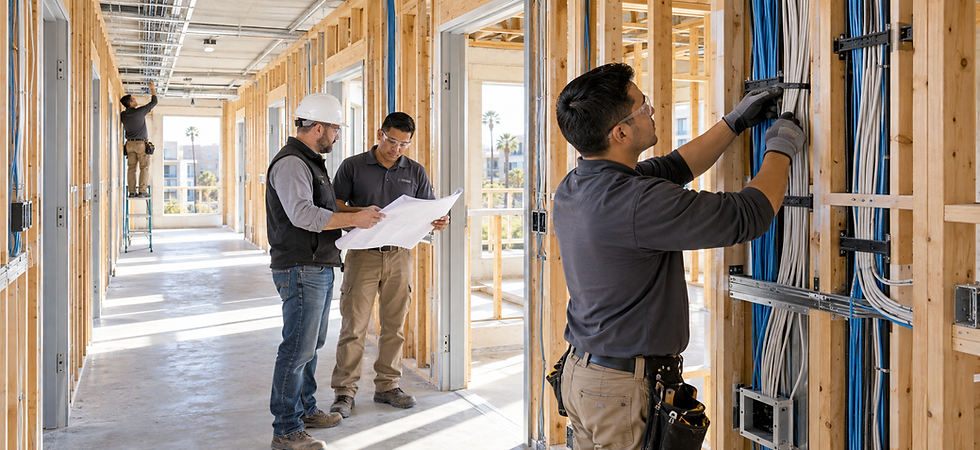
What Is Low-Voltage Wiring in Multifamily Construction?
Low-voltage wiring generally refers to cabling used for communications, security, and control systems. Depending on the project, it may support:
Internet, data, and telecommunications
Video surveillance cameras
Access control and electronic entry
Intercoms and building communication
Security alarm devices
Structured cabling in apartments and common areas
Fire alarm and life-safety systems, under a separate scope
The exact system list varies by building. Some systems serve individual apartments; others serve lobbies, garages, amenity spaces, corridors, or building-wide equipment rooms.
Plan the Systems Before Construction
Low-voltage planning should begin while architectural and electrical plans are being developed. The owner, architect, general contractor, electrical contractor, and low-voltage contractors should confirm what systems are required and where equipment will be located.
Map unit and common-area needs
Create a device and outlet plan for representative apartments, then account for differences among unit layouts. Separately map shared spaces such as:
Main entrances, lobbies, and leasing offices
Elevators, corridors, and stair areas
Parking garages and vehicle entrances
Package rooms and amenity spaces
Mechanical, electrical, and communications rooms
Exterior doors, gates, and site access points
This coordination helps avoid missed locations and late changes.
Choose equipment and pathways early
Confirm the proposed equipment, cable types, routes, and termination locations with the project team. Equipment-room size, access, power, cooling, and pathway capacity may affect the design. The system designer and contractors should coordinate applicable code requirements and manufacturer instructions.
Coordinate with other trades
Low-voltage routes may cross areas used by electrical, plumbing, HVAC, and fire-protection work. Resolve these conflicts during coordination meetings and document approved routes before rough-in. Keep fire alarm pathways and installation requirements within their own plans and approvals where required.
Keep Fire Alarm Work Distinct
A multifamily fire alarm system is not the same as a security alarm, intercom, or camera system. Fire alarm work has life-safety requirements and is subject to specific contractor licensing and local review.
The California Contractors State License Board says fire alarm work is subject to contractor licensing law and requires a C-10 Electrical license. CSLB also states that low-voltage fire alarm systems are specifically excluded from the C-7 Low Voltage Systems classification. Confirm contractor qualifications for the specific scope before work begins. CSLB: Building Official Information Guide CSLB: C-7 Low Voltage Systems Contractor
For projects within its jurisdiction, the Los Angeles Fire Department reviews fire and life-safety systems for applicable new construction and remodeling. LAFD’s Fire Development Services also conducts plan checks, permit approvals, and field inspections. Multifamily properties may be subject to plan review depending on the project and occupancy. Requirements in Burbank, Pasadena, Santa Monica, and other nearby cities may be administered by different authorities.
Do not assume that low-voltage rough-in alone completes a fire alarm project. The approved design, required permits, installation, testing, and inspection all need to be coordinated for the applicable project.
Best Practices for Multifamily Low-Voltage Rough-In
Label cables and keep records
Label each cable at both ends with its unit, room, and intended device or system. Maintain a cable schedule and updated drawings so installers and future service technicians can identify the runs.
Protect pathways and plan for access
Coordinate sleeves, conduit, risers, and cable pathways with the building design and applicable firestopping requirements. Keep equipment and junction locations accessible for installation and maintenance.
Coordinate unit access and construction phasing
Multifamily projects often involve repeated layouts and phased construction. Establish a representative unit or mock-up for coordination, then confirm that the approved details carry through to each unit type and common area.
Plan testing and turnover
Before occupancy, define who will test each system, who will witness testing where required, and what records will be turned over to the owner or property manager. Provide updated drawings, device schedules, and operating information.
Why Choose Cyber Shield Security?
Multifamily low-voltage work requires coordination among the owner, design team, general contractor, and multiple trades. Clear scope and early planning help reduce installation conflicts and set expectations for inspections, turnover, and ongoing service.
Cyber Shield Security works with property owners, developers, general contractors, and managers on fire alarm installation needs in Los Angeles and nearby areas, including North Hollywood, Studio City, Burbank, Sierra Madre, Arcadia, Pasadena, Woodland Hills, Sherman Oaks, Santa Monica, Beverly Hills, and West Hollywood. Discuss the project scope early so fire alarm requirements can be coordinated with the construction schedule.
Frequently Asked Questions
What low-voltage systems are commonly included in apartment
construction?
Projects may include data and telecommunications, intercoms, cameras, access control, security alarms, and fire alarm systems. The exact scope depends on the building design, owner requirements, and applicable codes.
Should low-voltage wiring be installed before drywall?
Generally, rough-in cabling is installed while walls and ceilings are open. The construction team should coordinate the schedule and inspect the work before covering it.
Is fire alarm wiring part of a standard C-7 low-voltage contract in California?
CSLB specifically excludes low-voltage fire alarm systems from the C-7 classification and states that fire alarm work requires a C-10 Electrical license. Verify the contractor’s license and the precise scope of work. CSLB: C-7 Low Voltage Systems Contractor CSLB: Building Official Information Guide
Does every multifamily project need fire alarm plan review?
Not necessarily. Review and permit requirements depend on the project, occupancy, scope, and AHJ. LAFD reviews applicable fire and life-safety projects within its jurisdiction; other cities may follow their own processes.
Who should coordinate low-voltage plans with the general contractor?
The owner or developer should identify the systems and performance goals. The design team and qualified contractors then coordinate equipment locations, pathways, power, construction sequencing, permits, and testing with the general contractor.
What should be included in low-voltage project closeout?
Closeout records commonly include updated drawings, cable and device schedules, system test documentation, equipment information, and operating instructions. Confirm the specific deliverables required by the contract and AHJ.
Can security cameras, access control, and fire alarm use the same wiring plan?
They can be coordinated on the overall project, but each system has its own equipment, design, installation, and approval requirements. Fire alarm should be addressed as its own life-safety scope.
Contact Cyber Shield Security
Planning a new apartment building, multifamily renovation, or tenant improvement? Contact Cyber Shield Security early to discuss the fire alarm installation scope and how it fits the construction schedule.
Call (310) 242-3100 or email info@cybershieldsecurity.us to discuss a project in Los Angeles or a surrounding community.


