What Does a Low-Voltage Contractor Install in a New Home?

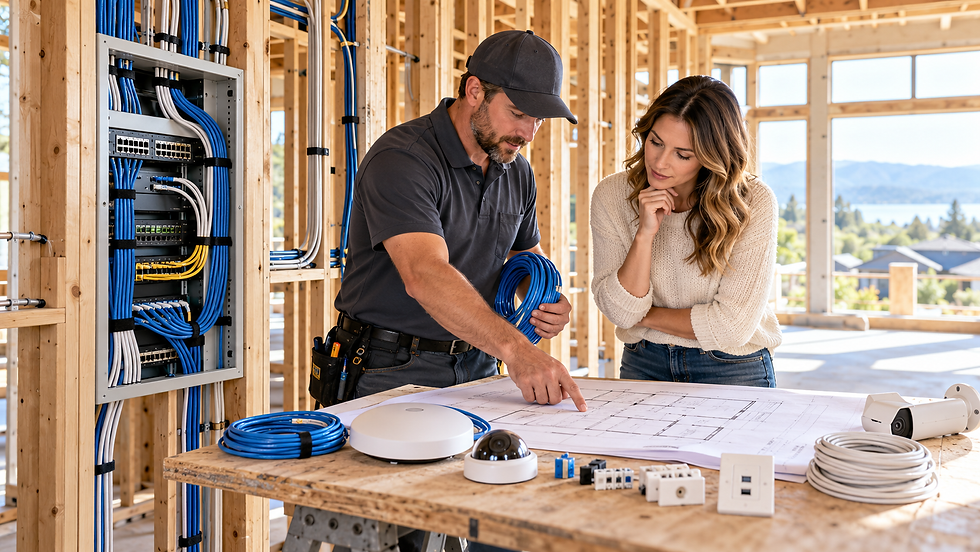
A low-voltage contractor can install the wiring and devices that support a home’s internet, cameras, security system, audio, and other connected features. Planning this work during construction makes it easier to route cables through walls and ceilings before they are closed.
The exact scope depends on the home, the owner’s plans, and the contractor’s license. California’s C-7 classification covers certain low-voltage systems up to 91 volts, including communications and closed-circuit video systems. It specifically excludes low-voltage fire alarm systems. CSLB C-7 classification details.
What Low-Voltage Systems Can Be Installed in a New Home?
A low-voltage contractor may install or prepare infrastructure for systems such as:
Ethernet and structured data cabling
Wireless access points
Security cameras
Burglar alarm sensors and keypads
Doorbells and intercoms
Audio and home theater wiring
Television and coaxial cabling
Smart-home and control wiring
Network cabinets, patch panels, and equipment locations
Not every new home needs every system. The best plan starts with how the residents expect to use the home, where internet coverage is needed, and which devices should be hardwired.
Structured data and Wi-Fi cabling
Ethernet runs can connect offices, televisions, access points, and network equipment. A wired connection may be useful for devices that need consistent connectivity, while strategically placed wireless access points can extend Wi-Fi coverage.
The cabling plan should identify data outlets, access point locations, and a central equipment area. The router, modem, switches, and other equipment need space, ventilation, power, and convenient access.
Security cameras and alarm systems
A low-voltage contractor may install camera cabling, camera mounts, alarm sensors, keypads, or other security wiring, depending on the project and license scope. Camera locations should be planned for useful views and practical cable routes.
For security systems, decide which doors, windows, and other areas need coverage. Discuss how the system will be controlled and whether the owner expects local alerts, remote app access, or monitoring service.
Audio, intercom, and smart-home wiring
A new build can include speaker wiring, television locations, door intercoms, and low-voltage control wiring for selected smart-home functions. Even if devices will be purchased later, installing planned cable pathways during construction can preserve options for future upgrades.
Why Plan Low-Voltage Wiring Before Drywall?
Planning early helps coordinate the cable routes with framing, electrical work, HVAC, insulation, and finish schedules. It also makes it easier to place outlets and devices where the homeowner expects them.
Before walls are closed, the owner, builder, electrician, and low-voltage contractor should confirm:
Device locations and cable destinations
The location of the network cabinet or equipment panel
Cable pathways and wall penetrations
Any sleeve or conduit needed for future changes
Which systems are part of the current project and which are future-ready provisions
The builder’s drawings and the low-voltage plan should match the final room layout. Changes to a home office, media room, or entry location can affect device placement and cable routing.
What Should Homeowners and Builders Ask Before Hiring?
Ask the contractor to explain the proposed system in plain language and provide a scope that lists locations, cable types, devices, testing, and any exclusions. For a new home, share the floor plan and construction schedule as early as possible.
Useful questions include:
Which systems and devices are included in the proposal?
Where will the network and other equipment be located?
What cabling will be installed, and where will each run end?
Will the system be tested and labeled?
What should be coordinated with the electrician or builder?
Are permits or inspections required for this scope and address?
Permit requirements depend on the work and the local jurisdiction. LADBS lists permit options for certain types of work, including new telephone and computer wiring, but confirm the requirements for the full project scope and property address with the serving department. LADBS Plan Check and Permit resources.
Low-Voltage Work Is Not the Same as Fire Alarm Installation
A home security system or camera system does not replace a fire alarm system. Fire alarm systems are life-safety systems and have separate licensing requirements in California. CSLB states that low-voltage fire alarm systems are not included in the C-7 classification and that fire alarm work requires a C-10 Electrical Contractor license. CSLB guidance on fire alarm work.
If a new home project includes fire alarm equipment or required fire protection work, identify that scope separately and coordinate it with the builder and local authority having jurisdiction. Cyber Shield Security can discuss fire alarm installation needs for residential and commercial projects.
Low-Voltage Installation in Los Angeles and Nearby Communities
Cyber Shield Security serves customers in Los Angeles, North Hollywood, Studio City, Burbank, Sierra Madre, Arcadia, Pasadena, Woodland Hills, Sherman Oaks, Santa Monica, Beverly Hills, and West Hollywood.
Whether you are a homeowner planning a new build or a developer coordinating multiple properties, share the address, floor plan, construction stage, and system goals when discussing the project. Requirements and permit processes can vary by location.
Why Choose Cyber Shield Security?
A well-planned low-voltage system starts with the home’s layout and how people will use each space. Cyber Shield Security can discuss camera, alarm, cabling, and fire alarm needs with homeowners, builders, developers, and property managers in the Los Angeles area.
Early conversations can help coordinate device locations and installation timing with the construction schedule. For fire alarm work, confirm the appropriate license and local approval requirements for the specific project.
Frequently Asked Questions
What is considered low-voltage wiring in a new home?
It generally refers to energy-limited wiring used for communications, data, audio, video, and similar systems. California’s C-7 contractor classification describes systems not exceeding 91 volts and lists examples such as telephone, sound, cable television, and closed-circuit video systems.
Does a low-voltage contractor install internet service?
A contractor can install in-home data cabling and related equipment locations. Internet service itself is provided by an internet service provider.
Should I wire a new home for security cameras before construction is finished?
Planning camera locations and cable routes during construction can make installation easier. The final devices may be installed during construction or later, depending on the project plan.
Do I need a network cabinet in my home?
Not every home needs a cabinet. A designated, accessible equipment area can help organize network devices and cable connections, especially when the home has several wired systems.
Does new-home low-voltage wiring need a permit in Los Angeles?
Permit requirements depend on the scope and the property’s jurisdiction. LADBS lists permit options for certain telephone and computer wiring work; confirm whether your complete project needs a permit or inspection.
Can a C-7 low-voltage contractor install a fire alarm?
The C-7 classification specifically excludes low-voltage fire alarm systems. CSLB says fire alarm work requires a C-10 Electrical Contractor license.
When should I contact a low-voltage contractor for a new build?
Contact one while the floor plan and construction schedule are being developed, ideally before walls are closed. This gives the project team time to coordinate cable routes, device locations, and equipment space.
Contact Cyber Shield Security
Planning low-voltage wiring, security cameras, alarm equipment, or fire alarm installation for a new home or property in Los Angeles or nearby communities? Contact Cyber Shield Security to discuss your plans and project timeline.
Call (310) 242-3100 or email info@cybershieldsecurity.us.


