When Should a Property Manager Schedule a Fire Alarm Repair?

A fire alarm system is one of the most important life-safety systems in an apartment building or commercial property. When a detector, control panel, notification device, or communication component malfunctions, property managers must respond promptly to protect occupants and maintain building safety.
But when should a property manager schedule a fire alarm repair?
A property manager should arrange a fire alarm inspection or repair as soon as a fault, malfunction, damaged component, recurring trouble signal, or failed test is identified. Problems involving impaired detection, notification, or required monitoring should never be ignored or postponed until the next routine maintenance visit.
For property managers in Los Angeles, understanding the warning signs and knowing how to respond can help prevent extended system downtime, operational disruptions, and potential code compliance issues.
Cyber Shield Security works with property owners, property managers, and construction professionals to discuss fire alarm installation and related low-voltage project requirements. This guide explains when repairs are necessary, what warning signs to watch for, and how to manage fire alarm problems effectively.
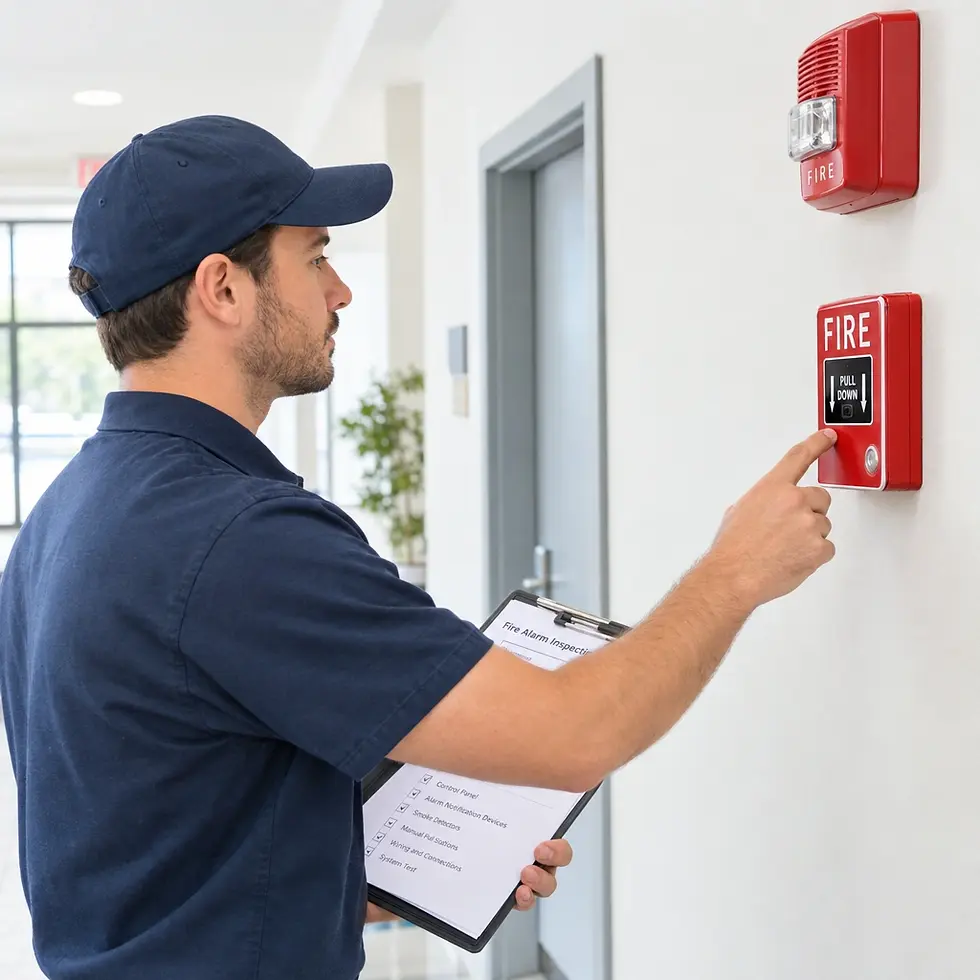
When Should a Property Manager Schedule a Fire Alarm Repair?
A fire alarm repair should be scheduled as soon as the property manager becomes aware of a system malfunction or an inspection identifies a deficiency.
Some problems may affect only one device, while others can compromise a larger part of the fire alarm system.
Property managers should arrange professional evaluation when:
The fire alarm control panel displays a persistent trouble condition.
Smoke or heat detectors fail testing.
Horns, speakers, or strobes do not operate correctly.
Manual pull stations are damaged or malfunctioning.
The system repeatedly produces false alarms.
A communication failure affects required monitoring.
Wiring or equipment shows visible damage.
A fire alarm inspection identifies deficiencies.
Recent construction or renovation affects the existing system.
The important distinction is that a trouble signal, an alarm condition, and a system impairment are not necessarily the same. Each requires an appropriate response based on the actual condition of the system.
10 Warning Signs That Your Property's Fire Alarm System Needs Repair
Property managers should recognize common warning signs before a minor equipment issue becomes a larger problem.
1. Fire Alarm Control Panel Displays a Trouble Signal
The control panel continuously supervises the fire alarm system and identifies certain faults.
A trouble signal may indicate:
Wiring problems
Ground faults
Device communication failures
Battery problems
Power supply issues
Missing or disconnected devices
A trouble condition does not automatically mean that the entire system has stopped working. However, it should be investigated promptly to determine which functions are affected.
2. Smoke or Heat Detectors Fail Testing
Smoke and heat detectors must operate correctly to detect fire-related conditions.
A detector may require repair or replacement if it:
Fails an inspection or functional test
Has visible physical damage
Is disconnected or missing
Produces repeated trouble signals
Has reached the end of its service life according to the manufacturer
Property managers should never assume that a detector is working simply because it remains mounted on the ceiling.
3. Fire Alarm Horns or Strobes Do Not Activate
Notification appliances alert occupants when the system enters an alarm condition.
If a horn, speaker, or strobe fails to operate during testing, occupants may not receive the required warning.
This issue should be evaluated promptly because notification coverage is a critical part of the fire alarm system.
4. The Fire Alarm Panel Repeatedly Produces False Alarms
Repeated unwanted alarms can disrupt tenants, employees, business operations, and emergency response procedures.
Possible causes include:
Contaminated smoke detectors
Incorrect device placement
Environmental conditions
Wiring faults
Incompatible replacement devices
Programming problems
Property managers should investigate recurring alarms instead of repeatedly silencing or resetting the system without identifying the cause.
5. Backup Batteries Are Failing
Fire alarm control panels commonly include backup batteries to maintain operation during a loss of normal electrical power.
Warning signs may include:
Battery trouble messages
Low battery voltage
Damaged or swollen batteries
Failed battery tests
Batteries that no longer hold an adequate charge
A qualified technician should evaluate the battery condition and confirm that the replacement meets the system manufacturer's specifications and applicable requirements.
6. The System Loses Communication With Its Monitoring Service
Some fire alarm systems are required to transmit signals to an approved supervising station.
A communication failure may prevent required alarm, supervisory, or trouble signals from reaching the designated monitoring service.
Potential causes include:
Failed communication equipment
Network or telephone line problems
Cellular communicator issues
Power supply failures
Incorrect configuration
If required monitoring is interrupted, the property manager should contact the responsible service provider immediately and follow the applicable impairment procedures.
7. Fire Alarm Devices or Wiring Are Physically Damaged
Building renovations, water leaks, accidental impact, and unauthorized modifications can damage fire alarm components.
Look for:
Cracked detector housings
Loose or missing devices
Exposed or damaged wiring
Water intrusion
Damaged manual pull stations
Disconnected notification appliances
Damaged components should be evaluated by qualified personnel before the affected system is returned to normal operation.
8. The System Fails an Inspection or Functional Test
An inspection may identify problems that are not obvious during everyday building operations.
These deficiencies should be documented and corrected according to their severity and applicable requirements.
Property managers should obtain the inspection report, understand which components failed, and arrange the necessary corrective work.
9. Recent Renovations Have Affected the Fire Alarm System
Renovations can change room layouts, ceiling configurations, walls, occupancy, and building use.
These changes may affect detector placement, notification coverage, wiring, and system programming.
If construction work affects the fire alarm system, the property manager should arrange an evaluation to determine whether modifications, updated plans, permits, or additional testing are required.
10. The Fire Alarm System Experiences Recurring Problems
Repeated repairs involving the same components may indicate a larger underlying issue.
For example, recurring communication failures may point to an outdated communicator or unreliable network connection. Repeated device failures may indicate compatibility, wiring, environmental, or maintenance problems.
A broader system evaluation may be more practical than continuing to repair individual symptoms.
Emergency Fire Alarm Repair vs. Routine Maintenance: What's the Difference?
Not every fire alarm issue has the same urgency. Property managers should understand the difference between an immediate impairment response and routine corrective maintenance.
Situation | Recommended Response |
Fire alarm activates during a suspected emergency | Follow the building emergency response procedure and contact emergency services as appropriate |
Required fire alarm function is impaired | Initiate the applicable impairment procedure immediately |
Required monitoring communication is lost | Contact the responsible provider and follow impairment requirements |
Detector fails a functional test | Arrange corrective action promptly |
Persistent panel trouble signal | Request professional diagnosis |
Minor documented maintenance deficiency | Schedule correction within the required timeframe |
Recurring false alarms | Arrange investigation to identify the cause |
A property manager should not determine that a system is safe simply because the panel can be reset.
If a required fire alarm function is impaired, the building's approved impairment procedures must be followed. Depending on the circumstances and applicable requirements, this may involve notifying the fire department or fire code official, informing occupants or designated personnel, and implementing a fire watch.
What Should a Property Manager Do When a Fire Alarm System Fails?
When a fire alarm problem occurs, property managers should follow a clear response process.
Step 1: Identify the Problem
Check the fire alarm control panel and record the displayed message, affected zone, device, or trouble condition.
Do not open, disconnect, or modify the panel unless authorized and qualified to do so.
Step 2: Determine Whether the System Is Impaired
Establish whether the problem affects a single component or an important system function.
A qualified fire alarm professional should help determine the extent of the impairment.
Step 3: Follow the Building's Impairment Procedure
If a required fire protection function is impaired, follow the applicable fire safety and impairment procedures.
Depending on the situation, these may include:
Notifying the appropriate fire department or fire code official.
Informing building management and designated personnel.
Notifying affected occupants when appropriate.
Implementing a fire watch when required.
Keeping records of the impairment and corrective actions.
The specific response depends on the nature of the impairment and instructions from the authority having jurisdiction.
Step 4: Schedule a Qualified Fire Alarm Technician
Arrange professional diagnosis and repair.
Provide the technician with relevant information, including the panel message, inspection reports, previous repair history, and any recent construction activity.
Step 5: Test the Repaired System
After corrective work, the affected components and functions should be tested according to applicable requirements.
The property manager should obtain documentation showing what was repaired and what testing was completed.
Step 6: Update Maintenance Records
Keep records of the reported problem, service visit, repairs, replacement components, test results, and any required notifications.
This documentation helps property managers track recurring issues and prepare for future inspections.
How Much Does Fire Alarm Repair Cost for Property Managers in Los Angeles?
Fire alarm repair costs vary depending on the cause of the problem, the equipment involved, and the amount of work required.
There is no single repair price that applies to every apartment building or commercial property.
Common cost factors include:
1. Type of Equipment
Repairing a single detector may involve different costs from troubleshooting a control panel, communication module, or notification circuit.
2. Number of Affected Devices
A problem involving several devices or multiple zones may require more diagnostic and repair time.
3. Wiring and Electrical Problems
Damaged cables, ground faults, circuit issues, and difficult-to-access wiring can increase labor requirements.
4. Replacement Parts and Compatibility
Some older fire alarm systems use equipment that is difficult to source or may no longer be supported.
Replacement parts must be compatible with the existing system and its approved design.
5. Accessibility and Building Layout
Repairs involving high ceilings, restricted mechanical rooms, occupied spaces, or multiple floors may require additional coordination and labor.
6. Testing and Inspection Requirements
After repairs, testing may be necessary to verify the affected devices and system functions. Additional inspection or approval may also be required depending on the project.
For an accurate estimate, property managers should provide the control panel model, trouble messages, inspection findings, and available system documentation.
Should You Repair or Replace an Existing Fire Alarm System?
Not every malfunction requires a complete system replacement. However, repeated repairs can become expensive when the equipment is outdated or incompatible with current requirements.
When Fire Alarm Repair Makes Sense
Repair may be appropriate when:
The control panel remains supported.
The problem is limited to one or a few components.
Compatible replacement parts are available.
Existing wiring and devices are in good condition.
The system can continue meeting applicable requirements after repair.
When Fire Alarm Replacement May Be Better
Replacement may be worth considering when:
The control panel is obsolete or unsupported.
Equipment failures occur repeatedly.
Replacement parts are difficult to obtain.
Multiple devices are damaged.
The system cannot support required modifications.
The cost of repeated repairs is approaching the cost of replacement.
A qualified professional should evaluate the existing system before recommending a complete upgrade.
How Can Property Managers Prevent Recurring Fire Alarm Problems?
Preventive maintenance helps identify potential problems before they develop into more serious system failures.
Property managers should establish a documented fire alarm maintenance program based on applicable codes, manufacturer instructions, and the building's requirements.
Recommended practices include:
Arrange required inspections and testing.
Keep fire alarm maintenance records current.
Investigate persistent trouble signals promptly.
Replace batteries and components according to applicable requirements.
Keep detectors and notification devices unobstructed.
Coordinate renovations with qualified fire alarm professionals.
Maintain updated system documentation.
Ensure building personnel understand basic alarm response procedures.
California Fire Code requirements and NFPA 72 provide important guidance for fire alarm inspection, testing, and maintenance, as adopted by the applicable jurisdiction.
Fire Alarm Repair Considerations for Los Angeles Property Managers
Property managers in Woodland Hills, Sherman Oaks, North Hollywood, Studio City, Burbank, Pasadena, and other Los Angeles communities must consider applicable local fire and building requirements.
For properties within the City of Los Angeles, the Los Angeles Fire Department and Los Angeles Department of Building and Safety may have responsibilities depending on the type of work and approval required.
When planning a repair, property managers should confirm:
Whether the work is a maintenance repair or a system modification.
Whether updated fire alarm plans are necessary.
Whether an electrical or fire permit is required.
Whether inspection or acceptance testing is required.
Whether the repair affects an approved fire alarm system design.
Whether the impairment requires notification or fire watch procedures.
Not every repair requires a new permit or a complete plan submission. Requirements depend on the work scope and applicable regulations.
Why Choose Cyber Shield Security?
Property managers need a clear and practical approach when fire alarm equipment malfunctions. Delayed diagnosis, unclear repair scopes, and repeated equipment failures can create unnecessary operational problems.
Cyber Shield Security works with property owners, property managers, business operators, and construction professionals to discuss fire alarm and low-voltage installation requirements.
Our approach emphasizes:
Project-specific evaluation: Understand the reported issue, existing equipment, and property requirements.
Clear communication: Help property stakeholders understand the repair scope and next steps.
System upgrade considerations: Identify when recurring problems may justify a broader system evaluation.
Construction coordination: Consider how renovations and building modifications affect fire alarm installations.
Commercial property awareness: Recognize the operational and life-safety responsibilities involved in managing apartment buildings and commercial facilities.
Whether you are addressing a persistent trouble signal, planning an upgrade, or coordinating a commercial fire alarm project, Cyber Shield Security can discuss your requirements and appropriate next steps.
Fire Alarm Repair and Installation Services in Los Angeles and Surrounding Areas
Cyber Shield Security serves customers across Los Angeles and nearby communities, including:
Los Angeles
North Hollywood
Studio City
Burbank
Sierra Madre
Arcadia
Pasadena
Woodland Hills
Sherman Oaks
Santa Monica
Beverly Hills
West Hollywood
Property managers in these areas can contact Cyber Shield Security to discuss fire alarm installation, system upgrade, and related low-voltage project requirements.
Contact Cyber Shield Security for Fire Alarm Repair
A malfunctioning fire alarm system should never be ignored. Whether your building has a recurring panel trouble signal, failed detector, damaged notification appliance, or communication problem, timely professional evaluation is essential.
Contact Cyber Shield Security to discuss your property's fire alarm requirements, repair concerns, or installation project.
Cyber Shield SecurityPhone: (310) 242-3100Email: info@cybershieldsecurity.us
Protect your building and support occupant safety with a properly evaluated fire alarm system. Contact Cyber Shield Security today to discuss your project and request an estimate.
Frequently Asked Questions About Fire Alarm Repair for Property Managers
1. When should a property manager schedule a fire alarm repair?
Schedule a professional evaluation as soon as a malfunction, persistent trouble signal, failed device test, damaged component, or inspection deficiency is identified. If a required fire alarm function is impaired, follow the applicable impairment procedure immediately.
2. What are the most common signs that a fire alarm system needs repair?
Common signs include persistent panel trouble signals, detector failures, malfunctioning horns or strobes, recurring false alarms, battery problems, communication failures, and visible damage to devices or wiring.
3. Can a property manager reset a fire alarm system without calling a technician?
A property manager may be authorized to perform certain routine operating functions, but repeatedly resetting a system without identifying the cause of a fault is not an appropriate repair. Persistent or recurring problems should be evaluated by qualified personnel.
4. Does a fire alarm system impairment require a fire watch?
Not every trouble signal automatically requires a fire watch. The need depends on the extent and duration of the impairment, applicable fire code provisions, and direction from the authority having jurisdiction. Property managers should follow the building's impairment procedures and obtain guidance when required.
5. How much does fire alarm repair cost in Los Angeles?
Repair costs depend on the affected equipment, number of devices, wiring condition, replacement parts, accessibility, and testing requirements. A professional assessment is needed to provide an accurate estimate.
6. Should I repair or replace an old commercial fire alarm system?
Repair may be appropriate if the system is supported, compatible, and in generally good condition. Replacement may be more practical when the panel is obsolete, failures are recurring, parts are unavailable, or the system cannot meet applicable requirements.
7. How often should a commercial fire alarm system be inspected and tested?
Inspection and testing frequencies depend on the applicable fire code, NFPA 72 requirements, system components, manufacturer instructions, and local requirements. Property managers should maintain a documented schedule rather than relying only on equipment failure reports.
8. Does fire alarm repair require a permit in Los Angeles?
Some repairs may be considered routine maintenance, while system modifications, equipment replacements, or changes to approved designs may require permits, plans, or inspections. Confirm the requirements with the appropriate Los Angeles authority before beginning work.


