Why Energy Efficiency Matters for California’s Clean Energy Future

Updated: Aug 13
California has long been at the forefront of efforts to reduce energy consumption and transition toward cleaner sources of electricity. As the state continues moving toward a more sustainable energy future, renewable energy is only part of the equation.
Energy efficiency is just as important.
Producing cleaner energy is valuable, but using energy more efficiently can reduce unnecessary demand, lower operating costs, improve comfort, and help make the transition to cleaner energy more practical.
For homeowners and businesses, this means energy efficiency isn't simply an environmental goal. It can also be a practical strategy for creating smarter, more comfortable, and more cost-conscious properties.
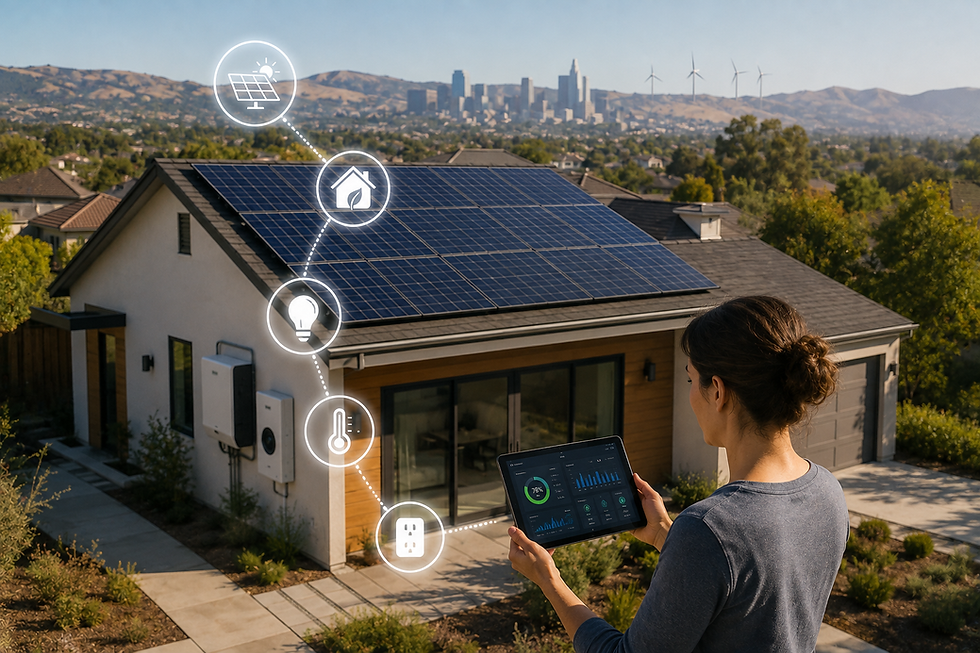
At Cyber Shield Security, we believe connected technology can play an important role in this transition. Smart thermostats, automated lighting, environmental sensors, energy monitoring, and intelligent home and building controls can help people understand and manage how energy is being used.
When people think about energy efficiency, the first thing that often comes to mind is reducing electricity costs.
Lower utility bills are certainly an important benefit, but energy efficiency can provide much more.
Efficient homes and buildings can help:
Reduce unnecessary energy consumption
Improve indoor comfort
Reduce strain on electrical systems
Improve equipment performance
Support sustainability goals
Reduce operating expenses
Make buildings more responsive to changing conditions
Instead of simply producing more energy to meet growing demand, improving efficiency helps reduce the amount of energy needed in the first place.
That makes efficiency an important part of a broader clean-energy strategy.
Smart Technology Makes Energy Efficiency Easier
Traditional energy-saving strategies often depend heavily on people remembering to adjust thermostats, turn off lights, or manage appliances.
Smart technology changes that approach.
Connected devices can automatically respond to schedules, occupancy, environmental conditions, and user preferences.
For example, a smart home can automatically:
Adjust the thermostat when nobody is home
Turn off lights in unoccupied rooms
Control outdoor lighting according to schedules
Monitor indoor temperatures
Alert homeowners about unusual conditions
Allow remote control of connected devices
These small adjustments can add up over time.
The goal isn't necessarily to use less energy at all times. Instead, it is to use energy more intelligently.
Smart Thermostats Can Help Manage Energy Demand
Heating and cooling systems can represent a significant portion of a property's energy use.
A smart thermostat can help homeowners manage HVAC operation according to occupancy and daily routines.
For example, instead of maintaining the same temperature throughout the day, homeowners can create schedules that reduce heating or cooling when the property is unoccupied and restore comfortable conditions before occupants return.
Remote access can provide another layer of control.
If plans change, homeowners can adjust their thermostat from their smartphone rather than allowing the system to continue operating according to an outdated schedule.
This type of intelligent control can help balance comfort, convenience, and energy efficiency.
Energy Efficiency Can Support a More Flexible Electrical Grid
As more renewable energy becomes available, managing when electricity is consumed becomes increasingly important.
Solar power, for example, produces electricity according to sunlight availability. This means energy production and energy demand don't always occur at exactly the same time.
Smart technology can help make certain electricity loads more flexible.
Connected devices such as smart thermostats, water heaters, and other controllable equipment can potentially adjust their operation according to schedules, energy conditions, or user preferences.
Instead of simply consuming electricity whenever a device needs it, smart systems can provide opportunities to shift certain energy use to more appropriate times.
This creates a more flexible approach to energy management.
Efficient Buildings Help Make Renewable Energy More Valuable
Adding renewable energy to a property can be an important step toward reducing dependence on conventional electricity sources.
However, the building itself still matters.
A poorly insulated or inefficient building can require large amounts of energy regardless of where that electricity comes from.
That's why energy efficiency should work alongside renewable energy.
Improvements such as:
Better insulation
Efficient windows
Modern HVAC systems
Smart thermostats
Efficient lighting
Automated controls
Energy monitoring
can reduce the amount of electricity a property needs.
When energy efficiency and renewable energy work together, homeowners and businesses can make better use of the energy available to them.
Energy Efficiency Should Benefit Everyone
One of the most important ideas from the source article is that energy efficiency can provide benefits